Let’s Talk About the Budget Vote - Again!
As we prepare to vote on the 2026–2027 school budget on Tuesday, May 19, many residents are asking important questions: Why is the proposed increase higher this year? What exactly is being funded? And what happens if the budget does not pass?
Here is a straightforward overview of the proposed budget and what it means for students, families, and taxpayers.
The Big Picture
The proposed Haldane budget for 2026–2027 is $31,892,876.
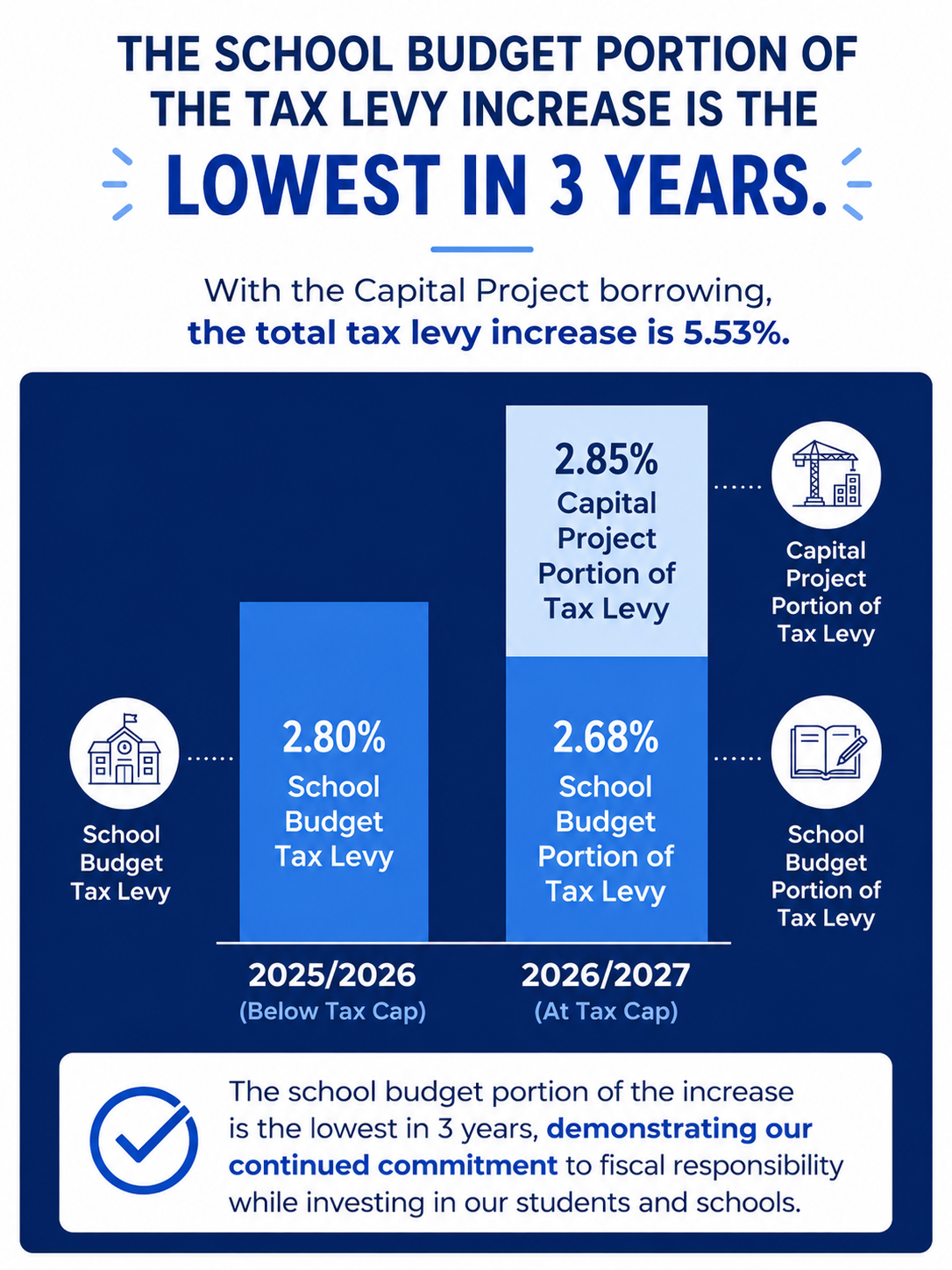
This represents an increase of from the current year’s budget of 5.77%. The district is asking voters to approve a tax levy of 5.53% to cover two components. At first glance, those numbers may feel significant. One major piece of the increase is tied to the voter-approved 2024 Capital Project and not day-to-day school operations.
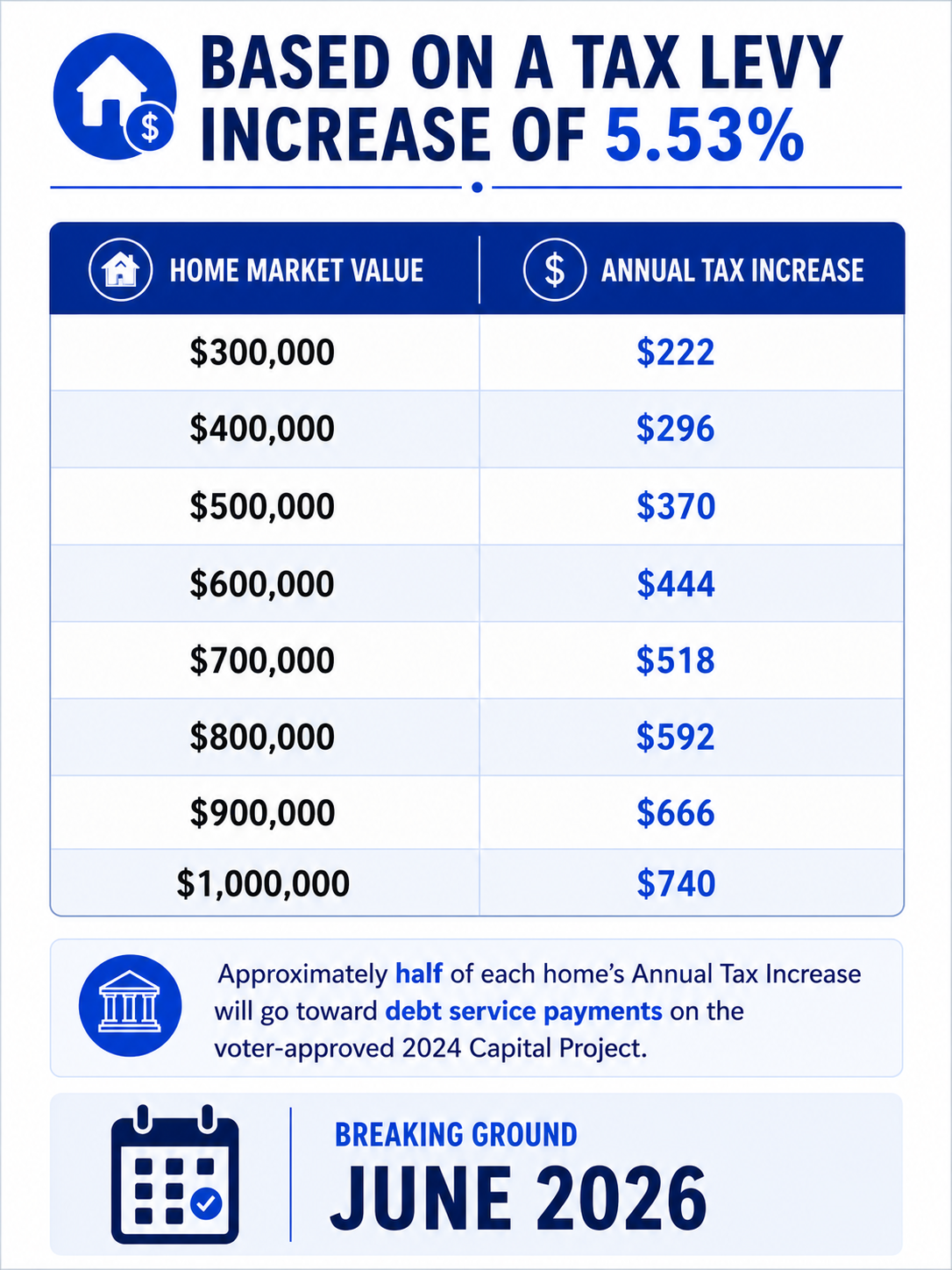
Approximately half of the tax increase will go toward debt service payments for the capital improvements approved by voters in 2024. The portion of the tax levy increase that goes directly to Haldane is 2.68%, the lowest increase in 3 years.
Why Is the Tax Levy Higher This Year?
New York State limits how much school districts can increase taxes each year through the property tax cap formula. Haldane’s allowable levy increase for 2026–2027 is 5.53%.
Importantly, the district actually stayed below the allowable cap last year in recognition of community support for the capital project.
This year’s increase reflects:
Debt service connected to the capital project
Rising operational costs
Increased special education expenses
Transportation and staffing needs
What New Investments Are Included?
The proposed budget includes several targeted investments intended to support student learning, inclusion, and school operations. These include:
$175,000 increase for special education funding, particularly for out-of-district placements
$40,000 increase to athletics for uniforms, supplies, team fees, and ambulance coverage
$16,000 for athletic light rentals for varsity games
$10,000 increase for STEAM programming
$10,000 for middle school transition costs
$25,000 for a school transportation assistant
These priorities reflect areas many families regularly discuss: supporting students with complex learning needs, maintaining strong extracurriculars, and continuing investments in academics and student experience.
Where Does the Money Come From?
The district’s revenue comes from several sources:
Tax Levy: $24.7 million
State Aid: $4.5 million (this is our “best guess” because NYS has still not approved a budget)
Other Revenue: $1.78 million
Fund Balance & Reserves: approximately $895,000 combined
Like most public school districts in New York, local property taxes make up the majority of school funding.
How Is the Budget Spent?
The budget is divided into three major categories:
Program Component (73.28%)
This is the largest portion of the budget and includes:
Classroom instruction
Special education
Counseling and social work
Athletics
Transportation
Library/media services
Health services
The proposed program budget is approximately $23.37 million.
Capital Component (14.94%)
This includes:
Building maintenance
Operations
Debt service for construction projects
The proposed capital budget is approximately $4.76 million, reflecting increased borrowing costs from the capital project.
Administrative Component (11.78%)
This includes:
District administration
Business office operations
Board of Education expenses
Legal and insurance costs
The proposed administrative budget is approximately $3.76 million.
Notably, administration remains under 12% of the overall budget.
What Does This Mean for Taxpayers?
The district provided estimated annual tax impacts based on home values.
Examples include:
$300,000 home: approximately $222/year ($18.50/month)
$500,000 home: approximately $370/year ($30.83/month)
$1,000,000 home: approximately $740/year ($61.67/month)
For many residents, balancing school investment with financial pressures is understandably difficult. The district presentation explicitly acknowledges this tension while emphasizing that a large portion of the increase is tied to long-term infrastructure improvements already approved by voters.
What Happens If the Budget Does Not Pass?
If voters reject the budget, the Board of Education has two options:
Hold a revote with the same or revised budget
Move to a contingency budget
A contingency budget would require approximately $1.3 million in reductions because the tax levy increase would effectively be capped at 0%.
Potential reductions could include:
Athletics
Extracurricular activities
Field trips
Equipment and supplies
Staffing adjustments and larger class sizes
Importantly, the previously approved capital project would still move forward regardless of the budget vote.
Other Propositions on the Ballot
In addition to the school budget, voters will also consider:
Proposition II: Purchase of one 24-passenger bus and two minivans ($175,000) - Tax Neutral (not included in tax levy)
Proposition III: Tennis court replacement ($275,000) - Tax Neutral (not included in tax levy)
Proposition IV: Transportation reserve fund (up to $5 million) - Tax Neutral (not included in tax levy)
Proposition V: Butterfield Library budget ($101,094; separate from the school budget)
When and Where to Vote
The Haldane School Budget Vote and Trustee Election will take place:
Tuesday, May 19
7:00 AM – 9:00 PM
Haldane Elementary Library
